Check your entry pathway
Find out whether Stage 1 or Stage 2 is right for you


All fields marked with are required.
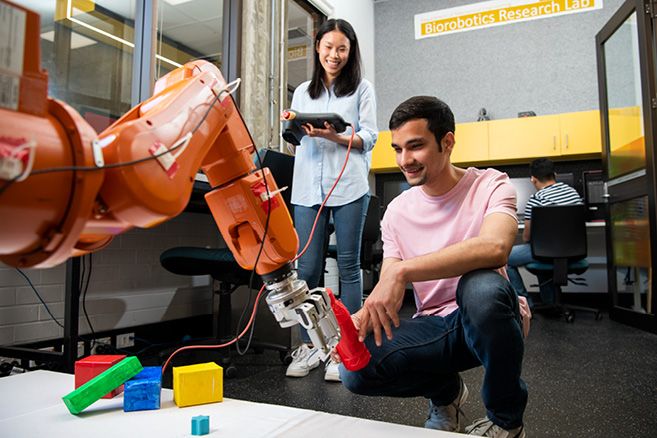
Bachelor of Engineering (Honours)
Find out whether Stage 1 or Stage 2 is right for you
Learn on Curtin’s Bentley campus
With applicable credit after meeting progression requirements
Curtin ranks first out of all public universities in WA for undergraduate full-time employment outcomes.
(Good Universities Guide 2026)
Academic Ranking of World Universities 2025
QS World University Rankings by Subject 2026
They started at Curtin College. See where their journey took them.

When do I need to pay my FEE-HELP debt?
You do not have to pay upfront now. You will be required to pay when you earn above the minimum income threshold (refer to the StudyAssist website for rates). The compulsory repayments are calculated in your tax return and are to be paid to the Australian Taxation Office.
Are Curtin College Diploma courses available online?
No. Curtin College Diploma courses are delivered face-to-face on Curtin University’s Bentley Campus in Perth.
Do I need an ATAR to study at Curtin College?
For most Curtin College courses, an ATAR is not required. Entry requirements vary depending on the course and your previous studies.
Can I study at Curtin College after completing TAFE or VET?
Yes. Your previous TAFE, VET or other recognised qualification may provide an entry pathway into a Curtin College Diploma, depending on the course and entry requirements.
How long does a Curtin College Diploma take?
Diploma Stage 2 can be completed in 8-12 months providing you the opportunity to fast-track your studies.
Can I progress directly to Curtin University after my Diploma?
Yes. After successfully completing your Diploma Stage 2 and meeting the relevant progression requirements, you can progress into the second year of selected Curtin University degrees.
Will I study at Curtin University?
You’ll study at Curtin College on Curtin University’s Bentley Campus, giving you access to the wider Curtin campus environment and facilities.